Describe the Path of Blood Through the Heart
Expert Answer 100 2 ratings These are pathway of blood through heart and lungs. Blood then flows from both upper atriums left atrium and right atrium into the two lower chambers left and right ventricles which then expand.

Pin On Tutoring
Repeats for the left side.

. Blood flows through a network of vessels called the circulatory system. The blood received by right atrium and pumped. Step 2 The blood flows through the tricuspid valve into the right ventricle.
1Blood enters the right atrium of the heart from the superior and inferior vena cava 2Blood passes through the tricuspid valve to the right ventricle. Are the smallest blood vessels and connect arterioles and venules. The deoxygenated blood that has returned to the heart via the vena cava is held in the right atrium.
3Blood is forced through the pulmonary valve to the pulmonary trunk 4Blood travels through the pulmonary trunk to the pulmonary arteries 5Blood travels to the lungs where. It enters the pulmonary artery through the semilunar valve and. Blood flows through the heart in the following order.
Describe the regulation of heart activity by the autonomic nervous system Answers should include the following ideas. A red blood cell is contained in the Oxygenated blood. Are the smallest blood vessels and connect arterioles and venules.
Describe the interaction of the cardiovascular system with other body systems. Atria- the two upper chambers of the heart- the receiving areas that pool incoming blood. The right ventricle contracts forcing blood into the pulmonary artery through the pulmonary.
Veins and carry blood to the heart. Explain the cardiac conduction system and the cardiac cycle. Pulmonary and systemic are the two circuits in the two-circuit system of higher animals with closed circulatory systems.
They are the location of exchange with individual cells and their walls are composed of a single thin layer of endothelial cells which allows for diffusion. When blood returns to your heart it flows to your lungs to receive oxygen. When a heart contracts and forces blood into the blood vessels there is a certain path that the blood follows through the human body.
It travels through the vasculature blood vessels to the organs we are told by science will be damaged if we do not get them enough blood. From the right ventricle it goes through the pulmonary semilunar valves to the pulmonary trunk 4. Pathway of blood through the heart 1.
And arterioles are blood vessels that carry blood away from the heart. The pathway of blood through the heart is as follows. The left side of the heart receives oxygen-rich blood from the lungs and pumps it to the rest of the body.
The deoxygenated blood from the body is received in the right atrium from the vena cava and enters the right ventricle through a tricuspid valve. From right atrium it goes through the tricuspid valve to the right ventricle. 1 body 2 inferiorsuperior vena cava 3 right atrium 4 tricuspid valve 5 right ventricle 6 pulmonary arteries 7 lungs 8 pulmonary veins 9 left atrium 10 mitral or bicuspid valve 11 left ventricle 12 aortic valve 13 aorta 14 body.
The blood reaches these organs either directly or through the lymph system. They are the location of exchange with individual cells and their walls are composed of a single thin layer of endothelial cells which allows for diffusion. The blood is oxygenated in the lungs and flows back to the heart in the pulmonary vein into the left atrium and down into the left ventricle where it is pushed up and out of the aorta to the body.
3 When the ventricle is full the mitral valve shuts. Veins and carry blood to the heart. This blood is kept until it may flow into the right ventricle through the tricuspid valve.
Blood Throught the Heart Blood Flow Through the Heart Beginning with the superior and inferior vena cavae and the coronary sinus the flowchart below summarizes the flow of blood through the heart including all arteries veins and valves that are passed along the way. Blood is pumped out of your heart via the lower chambers the more muscular right and left ventricles. Blood enters the right atrium from the superior and inferior venae cavae and the coronary sinus.
Step 1 Unoxygenated blood blood enters the right atrium from the superior and inferior vanae cavae. The deoxygenated blood from whole body reachs the right atrium through superior and inferior venacava. The blood moves through pulmonary circulation and then continues on through systemic circulation.
1 The pulmonary vein empties oxygen-rich blood from the lungs into the left atrium of the heart. 2 As the atrium contracts blood flows from your left atrium into your left ventricle through the open mitral valve. Step 1 Blood enters the right atrium through the superior and inferior venae cavae flows through the right AV tricuspid valve Step 2 Enters the right ventricle Step 3 The right ventricle pumps the blood through the pulmonary semilunar valve Step 4 Blood enters the pulmonary trunk which divides to carry blood to the lungs Step 5.
Step 3 From the right ventricle the blood flows through the pulmonic valve into the pulmonary artery. Blood Flow Through Your Heart Each time your heart beats it pumps out oxygen- and nutrient-rich blood to your body. The right side of the heart receives oxygen-depleted blood from the body and pumps it to the lungs.
Superior and inferior vena cavae and the coronary sinus 2. The Path of blood through the Circulatory System Blood circulation begins when the heart relaxes between heart beats. Identify and describe the size shape and location of the heart and the path of blood through the cardiac circuits.
Briefly describe the path of blood as it circulates through the heart upper body into the heart to the right atrium to the lung then back to the heart thought the right pulmonary artery then to the right ventricle.
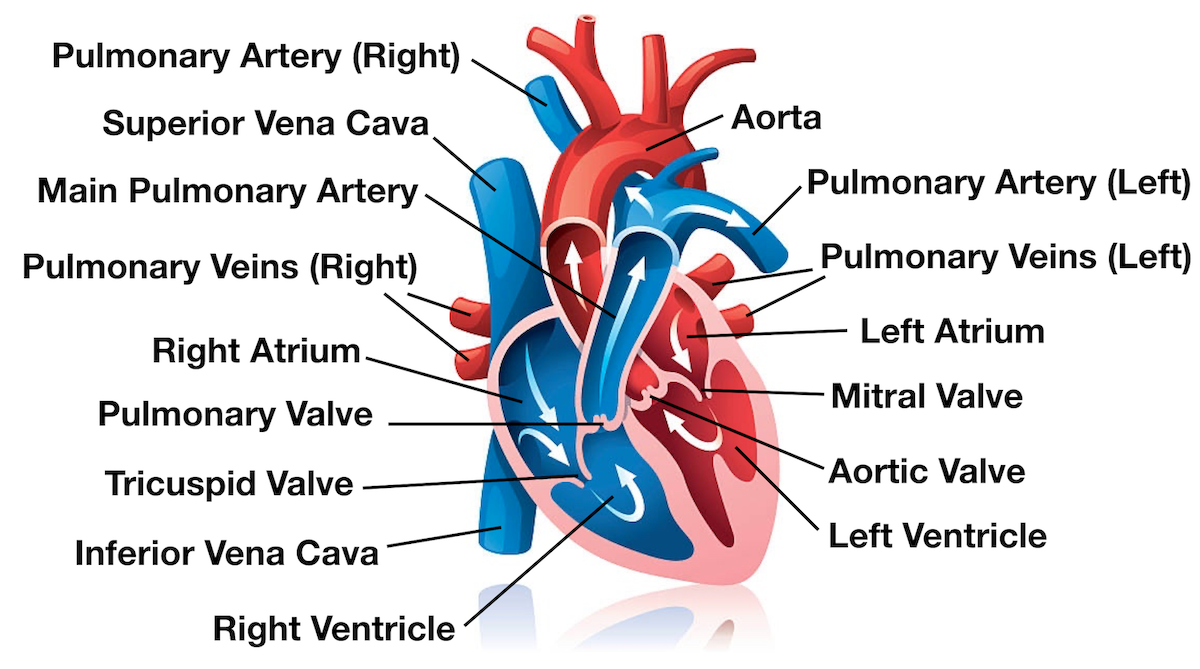
Heart Blood Flow Simple Anatomy Diagram Cardiac Circulation Pathway Steps Ezmed

Blood Flow Of Heart Blood Flow Physiology Path Of Blood Flow Diastole Systole Trace A Drop Of Blood Thr Nursing School Studying Nursing Notes Cardiac Nursing

Your Cardiovascular System
Pin On P E
No comments for "Describe the Path of Blood Through the Heart"
Post a Comment